
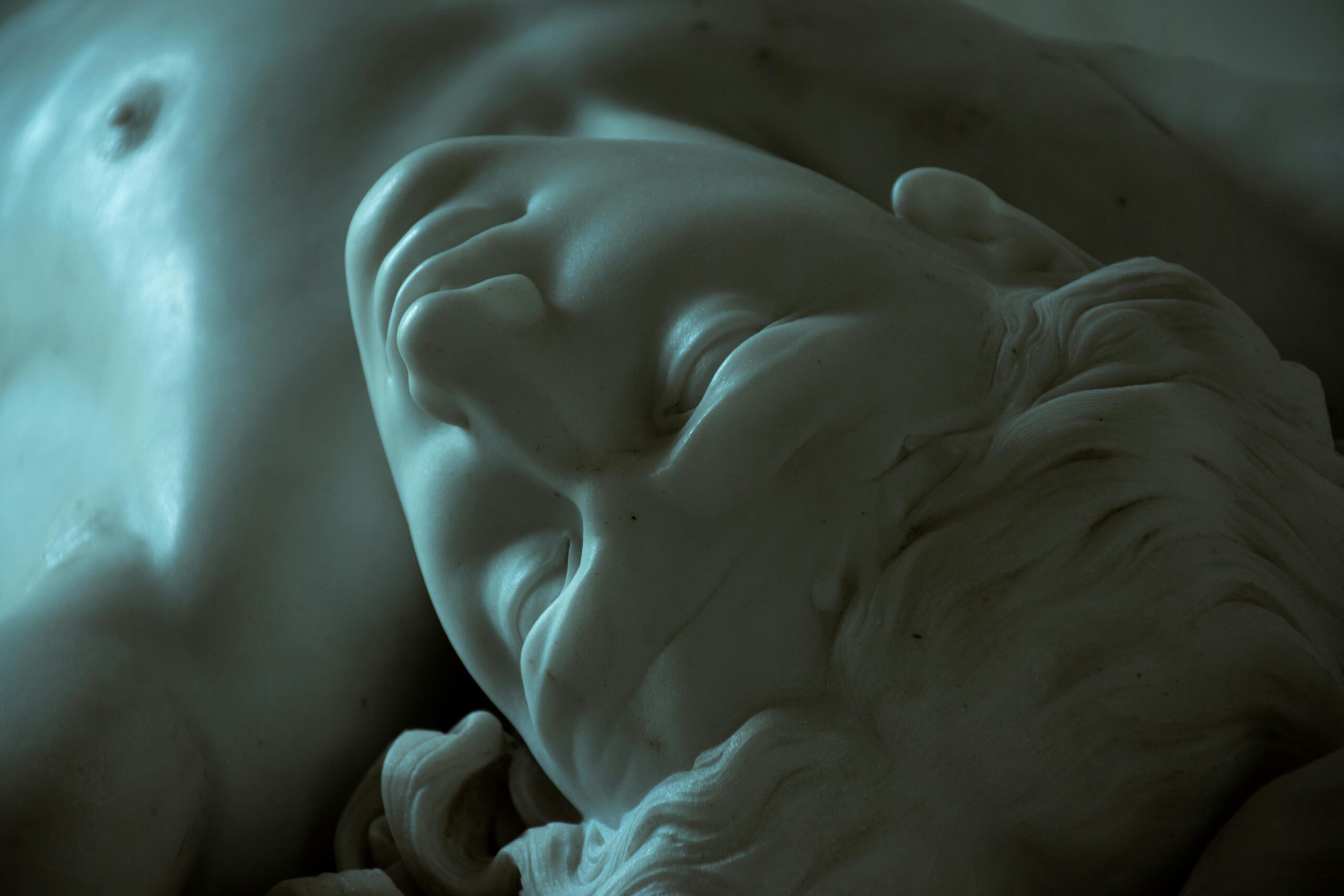
We live in a society ruled by technocratic elites. Their latest preoccupation: immortality. For Silicon Valley tycoons, the prospect of life ever-lasting is no more than a question of advanced engineering, scientific knowledge, and technological mastery. In their innovation-driven subculture, immortality is merely another point in a long line of technical challenges bested by human ingenuity. Immortality is as achievable (and as laudable) as the Artemis mission, the colonization of Mars. For technocrats, death is a glitch in our biological system, something that can be patched by hacking the right genes, fortifying the telomeres, concocting the right mix of hormones, or super-charging immunity. Driving the edge of an ultra-capitalist culture, they believe that longevity, or the defiance death altogether, will become the ultimate product, one that is sure to make the next billionaire. Perhaps the first trillionaire.
However, the inevitability of death is neither a tragedy nor a glitch in the system. Everything that exists abides an order characterized by arising and subsiding. The clouds gather and disperse. Tender leaves turn crispy brown. Tide waters surge and retreat. Seasons march their turn. Elements gather to compose an organic life form; in time, the same elements disperse and shape something else. Everything is a turning, where the little glimmers of light have their moment in the darkness of the universe. This is the galactic dance of the swirling stars and planets, of worlds coming into and out of existence.
To recognize this rhythm is to be initiated into an underlying order. The order is neither good nor bad. It precedes human notions, antedates our judgements. From this ancient dance we evolved our primitive egos, an functional artifice with its survival instincts and vested interests, indeed a galvanized sense of self through which we conduct a life. From this sense of self we perceive death as the ultimate annihilation and tremble at the thought of oblivion. We forget that the anxious and panic-stricken self is no more than an epiphenomena, a momentary effusion like the froth at the edge of a wave.
The hubris of technocratic culture would have us believe that no feat is too great for human intelligence, that a great milestone awaits behind the next great challenge. This culture believes that the audacity to take on the impossible marks the height of human greatness. However, this is an adolescent ambition, which strives for achievement without understanding, mastery without wisdom. To abide the cosmic order is neither surrender nor submission. It is a knowing accordance with the movement and function of all that is, a congruence that adheres to the gratuitous gift of life. To live is to spring from the organic and generative matter of all that has previously died. To die is to return to the primordial pond from which life springs. This is a cycle of formation and disintegration, congress and dispersal. It is also a steady state: what subsides does not disappear; forms change, but existence endures.
Every panic-stricken effort to stave off death reveals a deeper misalignment: a psyche powerless to withstand the winds of time, a self that subsists on the longing for fleeting youth. This is the psyche that generates the illusion of its own substance based on wanting what cannot be had. What other cultures deem delusional finds succour in the technocratic utopia, where there is little distinction between ambition and fantasy. Daring to achieve the impossible is more virtue than vice. Thus, one is sheltered from confrontation with futility, and the puerile longing for youth gets celebrated as entrepreneurial vision. This is a regressive psychological arch, one that is parcel to a consumerist culture in which toys, fun, pampered luxury and eternal youth comprise the ideal human life.
On the other hand, why should the natural order dictate our choices? We do not surrender to infectious diseases, nor do we allow cancers their unrestrained course. Modern medicine has all but eliminated plagues that devastated populations in ancient times. Vaccines have reduced the spread of contagion; advanced treatments help to alleviate many grave conditions. That humans are fated for sickness and old-age does not make a moral imperative of this fate, nor do efforts to prevent sickness and suffering constitute an ethical breach. David Hume once identified the naturalistic fallacy, the temptation to set nature as the standard from which moral deviations are judged, as a specious form of reasoning. If we pour resources into science and medicine to cure terrible diseases, and such efforts are morally just, why must we not attempt the next cure, a remedy for death itself?
However, a cure for sickness is different from the cure for death itself. This is not a difference in degree, but a difference in kind. A treatment for cancer can forestall death; it does not abolish death. Medical advancements of this kind do not defy mortality; they affect the experience of living by giving us more years under the sun. At some point, however, the curtain drops, and we reach the limits of medical science. Doctors and nurses regretfully take a somber step back when their craft can go no further. Death has the last word. This is not capitulation, but a reverence for life, which is always bound to death by contract. Efforts toward immortality upends this existential pact; it is not content to live with relatively little pain, or another few years of living, it wants life to be something else altogether. It wants to arise and never subside. It wants to thrive on the nutrients that come from the bodies of other beings but will not give any of its own.
To make peace with death because death is natural is not an example of the naturalistic fallacy. Rather, it is a recognition of the elemental order that girds all that exists. We benefit from what our predecessors have built and left behind. In due time, we shall also die and hopefully leave behind a largess that future generations will cherish. This is generational justice that has governed all of human evolution. To refuse death is to deny future generations the abundance so freely given to us by our ancestors.
Silicon Valley will continue to press for an elixir that ushers in eternal life. Meanwhile, the seasons follow their course, the waters flow toward the ocean. The sky does not vex over beginnings and endings. In the great silence of the stars, we can know peace in the face of death, and welcome the preciousness of life while we are here.

