
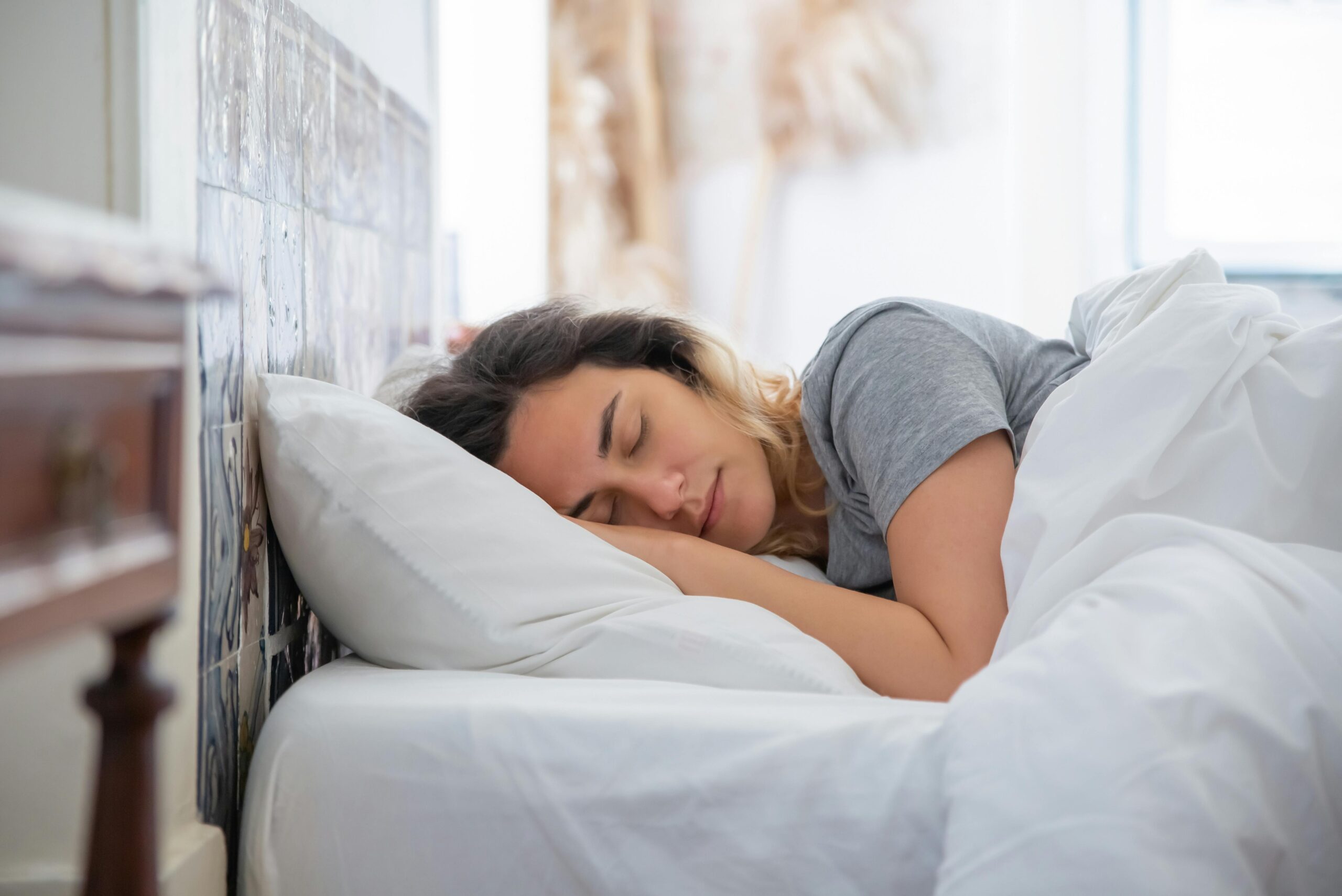
Shakespeare knew well the fundaments of human vitality. In Macbeth, Shakespeare depicts the inevitable devastation when one is deprived of sleep, a most basic physical necessity. After murdering King Duncan, Macbeth realizes that his guilty conscience will give him no rest until he is reduced to dust. He bemoans sleep’s departure:
Methought I heard a voice cry ‘Sleep no more!”
Macbeth doth murder sleep’, the innocent sleep,
Sleep that knits up the ravell’d sleeve of care,
The death of each day’s life, sore labour’s bath,
Balm of hurt minds, great nature’s second course,
Chief nourisher in life’s feast, . . .
What follows is a disturbing picture of Macbeth’s descent into paranoia, rage, and madness. Sleep deprivation is a sourcing of unrelenting affliction, causing hallucinations and delusions that would eventually lead to Macbeth’s violent death.
Scientists now corroborate the vital importance of sleep in maintaining our overall health. Sleep, as it turns out, is not merely an inconvenience that impedes productive wakefulness; it is indispensable to the body’s renewal and repair. A good night’s rest helps to maintain immune function, consolidate learning, maximize cognitive acuity, improve mood, optimize metabolism, repair cellular damage, prevent cardiovascular disease, minimize weight gain and forestall dementia later in life.[1] The cumulative effects underscore the importance of sleep as the common factor that underwrites all aspects of health.
People searching for relief from mental health problems, from irritability to low mood, rarely examine their sleep habits as a possible source of affliction. In Westernized culture, many symptoms are treated as inherent medical conditions, not as complications stemming from habits and lifestyle. The body has its own rhythm that accords with the cycles of days and seasons. The darkness of night settles the body into sweet rest, cradles the weary mind in a nest of dreams. Much of the abrasions that we endure in waking hours find salve in sleep. In this sense, sleep is a supreme healer, apt to restore body, heart, and mind.
Tragically, no force unleashed on slumber has been more devastating than our modern culture. Unlike our pre-industrial ancestors who slumbered under starry skies and woke to tell vivid tales of their dreams, we are the groggy, cranky, baggy-eyed descendants who trudge through the day starved for rest, scraping the dregs of our wakefulness to face a life made dull by fatigue. An epidemic of sleep-deprivation is now affecting vast segments of the population, from children to seniors. Our waking hours are numb and blurry, punctured by irritation and saddled by fatigue. Unlike other animals, we are the only species who willingly deprive ourselves of sleep to our own detriment.
Sleep provides a vital service when it comes to mood and emotional stability. Matthew Walker and his team of researchers studied two groups of healthy young adults. One group was kept awake for an entire night, while the other slept normally. The next day, both groups were shown a series of photos that included emotionally neutral content (e.g. A basket, a piece of driftwood) and emotionally negative content (e.g. A burning house, a poisonous snake about to strike). The researchers measured activity in the subjects’ amygdala, the emotional center of the brain that correlates with anger and rage. They found that the subjects who did not sleep showed 60 percent more emotional activation than those who slept a full night. The study has since been replicated by researchers in Japan[2]. Apparently, the difference between a sage-like serenity and the Hulk’s flying rage lies a good night’s sleep.
Never before has it been harder to shut our eyes. Reed Hastings, the co-founder and former CEO of Netflix, was reported to have said: “Sleep is our competitor.” Apparently, Netflix, the ubiquitous source of binge material, knowingly and willingly deprives viewers of sleep in the race to dominate attention and market share. Furthermore, Netflix is only one among a legion of social media platforms that feeds endless content to users, keeping eyes rivetted to the screen long past bedtime. Hastings could not have anticipated the negative health outcomes of sleep deprivation, nor did he deliberately devise a plan for sabotaging the health of millions. Nevertheless, he and his technocratic cohort have unwittingly accomplished what a tortured Macbeth could not: they have murdered our sleep and vacated the chief nourisher in our life’s feast, all without shedding one drop of blood.
It’s time for all of us to reclaim our rest and rediscover the goodness of sleep. However, sleep education poses a tricky problem for psychotherapists. Clients who suffer from anxiety and mood problems often come to counselling for strategies to cope with reactivity and negativity. Certainly, psychotherapy can offer much to those looking for these tools. However, a more effective and thorough intervention may lie in a review of sleep habits and practices. Inconsistent, erratic and insufficient hours of sleep is a sure way to undermine our mental health. Conversely, people often report how their mood and outlook improve dramatically when they consistently obtain high-quality sleep. This knowledge can put psychotherapists at odds with their clients. Whereas clients come to therapy expecting to talk about their deep-rooted problems, an astute therapist may prescribe sleep instead. Instead of insightful psychoanalysis, clients get an earful about sleep hygiene. Sleep, as a topic of discussion in therapy, is neither sexy nor exciting. Ironically, when the subject strays into matters of sleep, the client may find themselves yawning.
However, the research is quite clear. At the level of the overall population, much malaise around mental health (mood, anxiety, outlook, reactivity) can be alleviated by higher quality and more hours of sleep. This is the simple and effective medicine. Sleep better, feel better.
Cognitive Behavioural Therapy for Insomnia (CBT-I), is a systematic treatment that improves both the quality and duration of sleep and has been shown as an effective treatment for insomnia. In many cases, CBT-I is more effective than certain benzodiazepine and non-benzodiazepine medications. Even those who do not suffer from insomnia stand to benefit from CBT-I. Here are some principles that anyone can apply to their daily routines to improve their sleep.
Regular Bedtime; Regular Wake-Time
The body has its own circadian rhythm that regulates cycles of wakefulness and sleep. When our routines are consistent, this circadian rhythm becomes the stable center that underpins sleep. Modern life has been destructive to these rhythms. The overworked masses often spend much of their day at their jobs; they come home to discover only a few waking hours before bedtime. To come home only to sleep seems to rob them of leisure. Refusing to condemn themselves to a life that affords little beside work, they compensate by surfing social media, binge-watching shows, or playing video games. In effect, they are attempting to stretch the day, sacrificing precious sleep and undermining their health. Many will stay up late and wake up tired on weekdays; the chronically under-slept will slumber well past noon on the weekends, thinking that binge sleeping pays back the sleep debt accrued during the week. However, this irregularity only intensifies the vicious cycle. Wide variance in sleep-wake hours disrupts the circadian clock, upsets sleep drive, making it harder to fall asleep at the appropriate hour on Sunday night, and harder to wake up on Monday morning.
To ensure a steady circadian cycle, abide by the same sleep-wake schedule on weekdays and weekends. Slight variance is fine. Sleeping in an hour on a Sunday morning poses no real threat to one’s circadian rhythm. Vary bedtime and waketime by 5 hours, however, and the circadian clock goes haywire.
Sleep Hygiene
Humans are habit machines. Activities performed in sequence build associations and patterns. If I am used to working on my laptop, watching TV, surfing on my phone in bed, my brain will associated my bed with all of those things. Bed is no longer a place for rest; it is crowded with many preoccupations. Instead of priming itself for sleep in bed, my mind reflexively turns to my other habitual impulses: What’s on Instagram? I wonder which guest is on the Tonight Show? The impulses take over, thus drowning out the urge to sleep.
The remedy lies in training to the mind to associate the bed with sleep. Making the bed each morning composes a signal that this spot is now off-limits until bedtime. All activities are done elsewhere. When it’s time to sleep, we pull the covers and hit the pillow. Electronics, screens and laptops stay far from the bedroom. No scrolling for at least an hour before bed. A softly lit-home with dark spaces cue our circadian clocks, prompt the release of melatonin, and prime our brains for sleep. By establishing sleep-hygiene practices, we can train ourselves to fall asleep more quickly and obtain a consistent amount of sleep every day.
Alarm for Bedtime
Most people set an alarm to help them wake up. Very few people set an alarm for bedtime. The rude intrusion of the alarm, and the painful effort required to rise from the bed can be in part traced to insufficient hours of sleep. If we do not adequately the body what it needs, the body will cleave to what little it is given. By setting an alarm for bedtime, we are setting sleep as a priority, allotting sufficient hours for rest rather than allowing the clock to drift and slipping into drowsiness long past the witching hour. 7 to 8 hours is the optimum number of hours for most people. Note, however, that this duration refer to sleeping hours, not the total sleep opportunity. If it takes me 30 minutes to fall asleep, and I want to sleep for 8 hours, then I must allot myself 8 hours and 30 minutes of sleep opportunity. Most of us need a stretch of runway for our waking brain to land in dreamland.
Nighttime Chills
Ambient room temperature plays an important role in facilitating sleep. To fall asleep, the body’s core temperature needs to drop by 2 to 3 degrees. When body begins to cool, temperature-sensitive cells in the thalamus send a signal, which then triggers the release of melatonin. The chemical release begins the work of shutting down physical systems, priming the body for repair and restoration. Refrain from vigorous physical exercise in the evening, which speeds up metabolism and increase body temperature. By turning down the thermostat, or opening the window to let in an evening breeze, we ease our entry into our dreams.
Conclusion
As Shakespeare observed, sleep is indeed the chief nourisher in life’s feast. It is an indispensable element of health, mental and physical. Show me someone who’s not sleeping well, and I’ll show you someone who suffers mental health issues. There are no elixirs that promise health and vitality, but sleep comes very close. It’s not sexy, but it works. Establishing a regular sleep schedule and maintaining good sleep hygiene are some of the best ways to live a healthy, vibrant life.
[1] Matthew Walker, Why We Sleep: Unlocking the Power of Sleep and Dreams (Simon, 2017).
[2] Walker, Why We Sleep, p. 146-147.

